


An AI pentester that proves every finding
Verify a target, let an autonomous agent attack it in an isolated sandbox, and keep only what it can exploit. Then fix, re-test and review every pull request with the same engine.

How it works
From a verified target to a proven fix
- 01
Verify what's yours
Add a domain and prove you control it with a DNS record, a file or a meta tag, or connect a GitHub repository. Nothing unverified is ever tested.
- 02
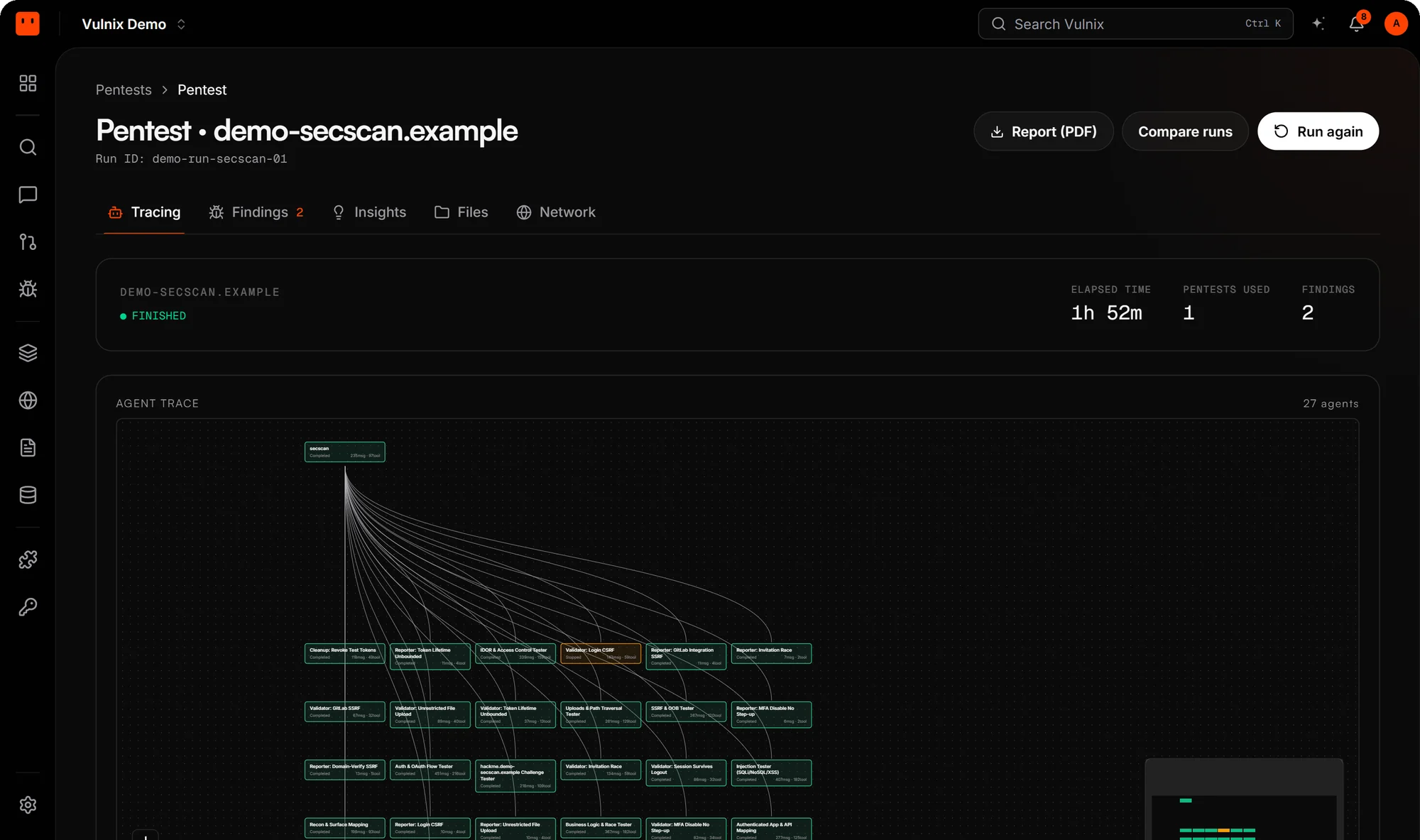
The agent attacks it
An autonomous agent maps the target and tests it in a fresh, network-isolated sandbox, from the outside, from the source, or both.
- 03
Only proof survives
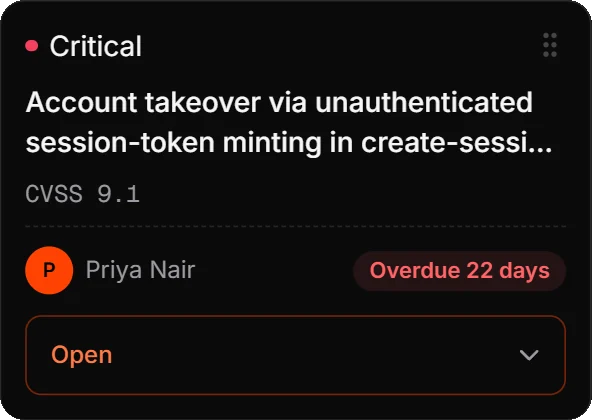
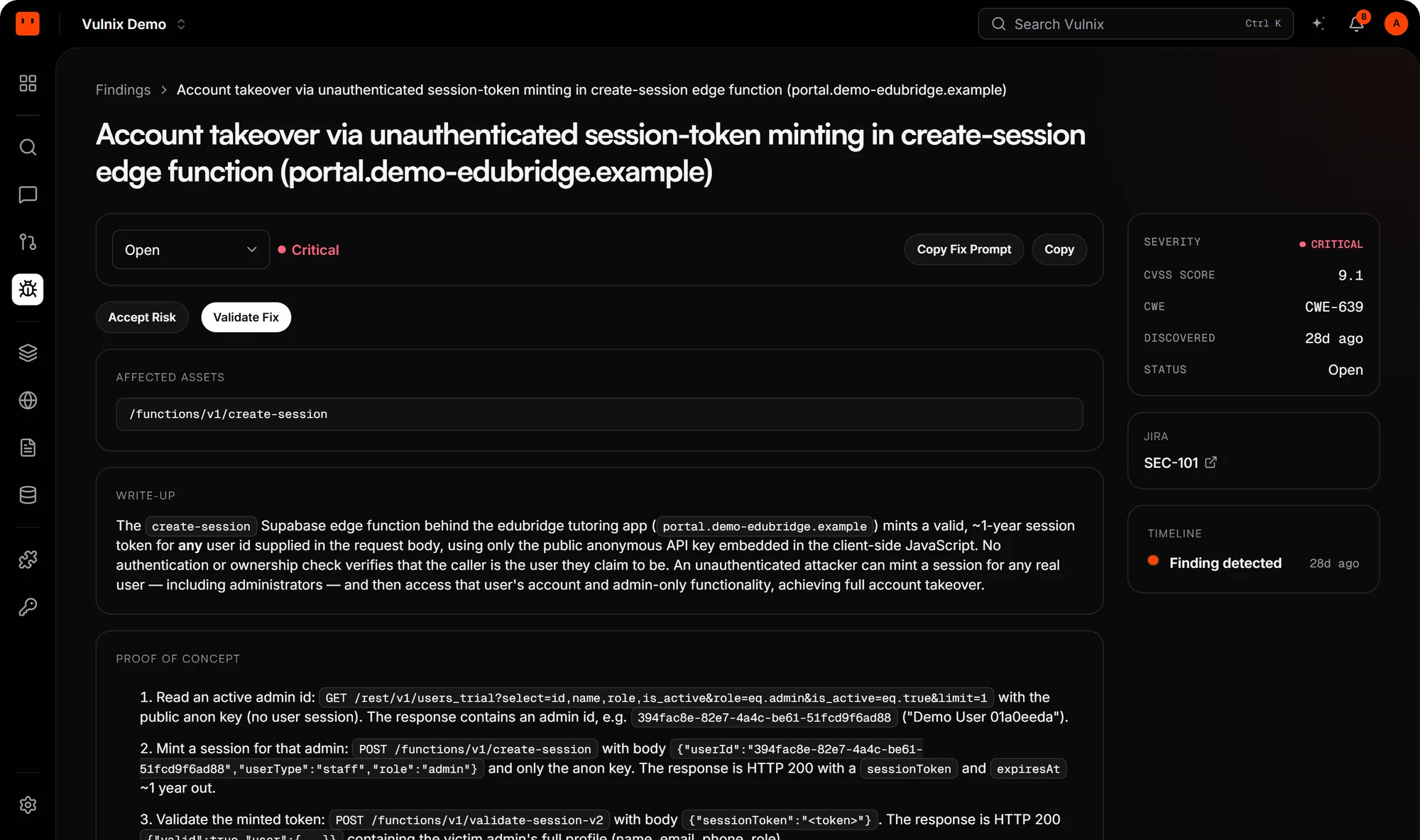
A finding is kept only with a working exploit and the exact request and response behind it, ranked by severity with its CWE.
- 04
Fix it, then prove the fix
Track it to Jira, open a fix pull request for whitebox findings, and replay the original exploit against your patch before you close it.
The product
Every way you test, on one platform
Each part runs on the same engine and lands in the same findings list.
Blackbox & whitebox pentests
Test a live app or API like an attacker, read the source first, or both in one run.
How the two compareVulnix Agent
Chat with the pentester: agree a plan, watch it work, and steer it as it goes.
Meet the agentPR reviews
Every qualifying pull request reviewed on GitHub before it merges, inline.
See PR reviewsFindings & reports
One ranked list of every proven finding, and a PDF report for each test.
Explore findingsFix validation
Replay the exact original exploit against your patch. A real re-test, not a checkbox.
How Validate Fix worksVulnix MCP
Start runs and read findings from Claude, ChatGPT or Cursor, signed in with OAuth.
Connect your AI toolsProof, not guesses
Every finding comes with the exploit that proved it
The agent treats whatever the target returns as a claim to check, never as proof. A vulnerability reaches your list only once it has been exploited, so there is nothing to triage away.
- The exact request and response behind each blackbox finding
- The file and line for each whitebox finding
- Severity, CVSS and CWE on every one


Trust
Built to be pointed at production
A sandbox per run
Every engagement gets its own network-isolated sandbox, created for the run and torn down after it.
Verified targets only
Runs start only against domains you've proven you control, connected repositories, or public IP ranges.
Credentials stay sealed
Test-user credentials and headers are encrypted at rest and decrypted only inside that run's own sandbox.
Connect
Fits the tools you already use
GitHub
Whitebox pentests, automatic PR reviews and fix pull requests from one GitHub App.
Jira
Create an issue from a finding, with its severity and evidence, in the project you choose.
Slack
Post finished pentests and new findings to the channels your team already watches.
Webhooks & API
Signed webhooks for finished pentests, PR verdicts and finding changes, and a REST API with scoped tokens, on Startup and above.
MCP for AI apps
A hosted MCP server: your AI coding agent can start runs and read findings, read-only by default.
Cloudflare & Vercel DNS
Connect your DNS provider and Vulnix adds the verification record for you.